


CANON EF 135MM F2 L USM TELEPHOTO LENS
Updated June 9, 2016
|

|

|

|

|

|

|

|

|

|

|

|

|

|

|

|
| Lens Composition | 10 Elements / 9 Groups |
| Angular Field of View | 18º at Infinity |
| Focus Type | Internal Rear Auto Focus, Ring-Type USM |
| Minimum Focus | .9 Meters / 3 Feet |
| F-Stop Scale | F2 to F32 |
| Filter Size | 72mm, Front Thread, Non-rotating |
| Filter Connection | Screw-in |
| Lens Cap | Canon E-72 II 72mm Lens Cap |
| Lens Hood | Canon ET-65III Lens Hood |
| Lens Pouch | Canon LP1219 Soft Lens Case |
| Weight | 1.7 Pounds |
| Lens Size | 4.4” Long x 3.2” Wide (Excluding Hood) |
OVERVIEW
The Canon 135L has its roots from the manual focus 135mm F2 in the FD mount (amongst several other 135mm lenses). For the EF mount Canon redesigned the 135L, increasing the element count from 6 to 10 and adding two “UD” elements. With the addition of the UD elements, the 135mm F2 L has optical performance similar to Canon’s super telephoto lenses. UD refers to “ultra low dispersion” glass. According to Canon, the use of two UD elements provides the same benefit as using one fluorite element. Fluorite elements are used to reduce (or eliminate) chromatic aberrations. Fluorite glass is expensive to manufacture, so UD elements are used in its place since UD glass is cheaper to manufacture.
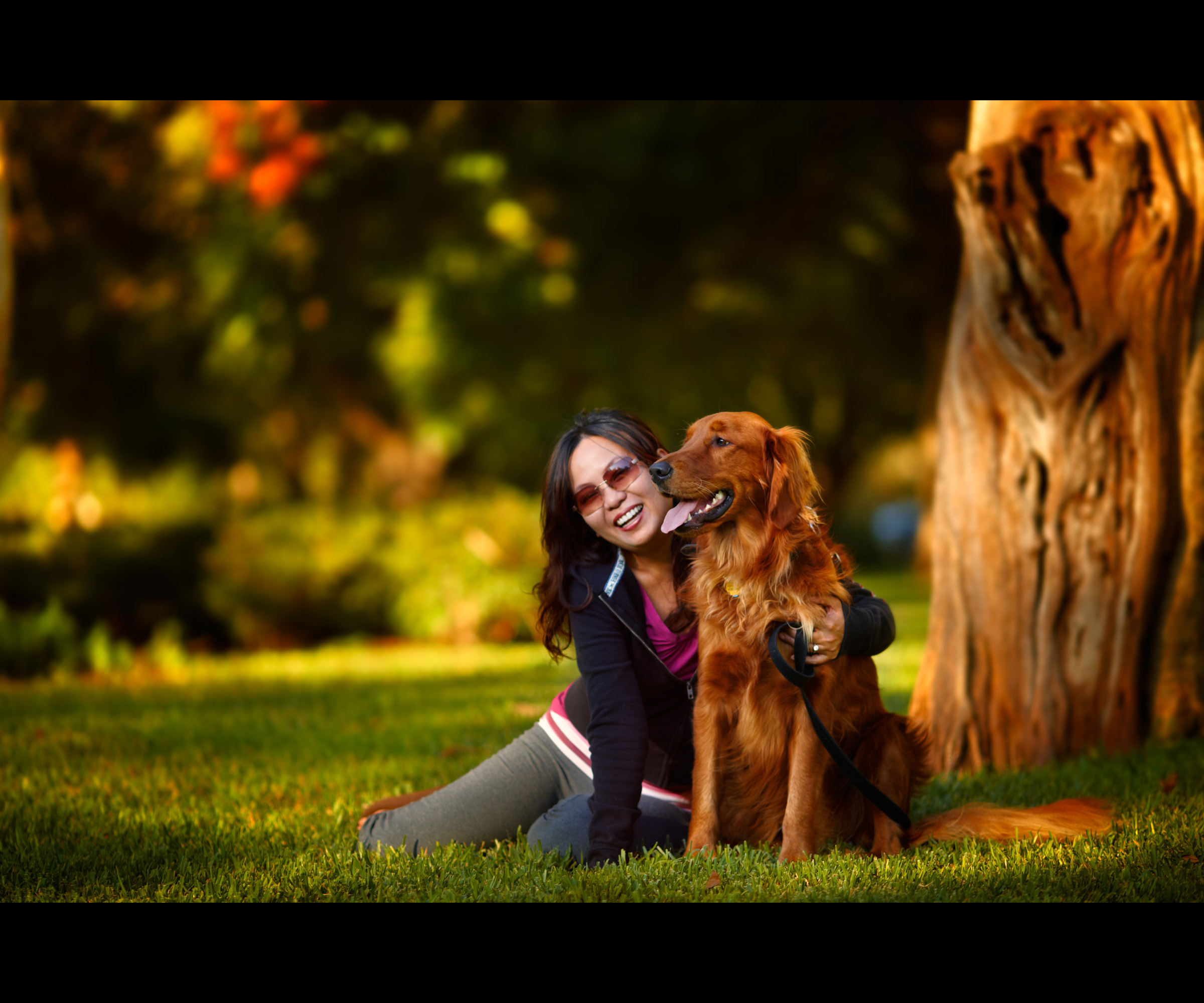
Part of the 135mm focal length’s attraction is its ability to isolate subjects from the background. The 135mm focal length is known for compression, minimizing backgrounds and perspective. Compression means flattening the depth in an image; objects behind a subject seem closer than they really are. Minimizing background relates to blurring the areas behind and in front of the focus plane, thus isolating the subject and allowing it to stand out. And perspective pertains to the narrow field of view, less sensitivity to the upward/downward angle of the lens and the sense of a vanishing point. These three characteristics increase as the focal length increases (ie - 200mm, 300mm, 400mm, etc).
BUILD QUALITY AND HANDLING
The 135L’s build quality is similar to Canon’s other L lenses, such as the Canon EF 24-105mm f/4L IS USM and Canon EF 200mm f/2.8L II USM. The lens barrel construction is a mix of metal and durable plastic. The 135L feels solid, durable and balanced. The Canon 135L has full-time manual focus, USM focus motors, internal rear-focus design and two UD elements.
Internal rear focusing provides several benefits - the lens remains a constant size when focusing, the front element does not move or rotate (good when using polarizer and graduated filters), and since the barrel extend there is less chance of dust finding its way into the lens. Rear focus designs generally provide fast(er) auto-focus performance, and the Canon 135L definitely has fast auto-focus. A focus limiter switch sets the minimum focus distance at either .9 meters or 1.6 meters. Focus speed is fast at either setting, and almost instantaneous when set at 1.6 meters. The ring-type ultrasonic motor provides smooth, noise-free auto-focus. For all intents and purposes, auto-focus operation is silent.
HANDLING
On the Canon 1Ds Mark III, the Canon 135L feels well balanced. Auto focus is fast and reliable. Once the focus system is set to your preferences, the 135L is easy to shoot in servo mode. I set the servo tracking to focus priority (instead of shutter speed) and the 1Ds Mark III results have been better than my experience with the prior 1Ds models. The 135L’s .9 meter minimum focus distance is quite short, so the 135L can be used as quasi macro lens as well. I often use the 135L for product shots and feel that it excels in this area.
PERFORMANCE
This section’s title implies a discussion about sharpness, resolution, color, contrast, bokeh, etc. To speed things along, let just categorize the 135L as “awesome”. It gets top marks in all those categories. Some other observations:
- The rendering is the standard Canon look - moderate saturation, good contrast (not too heavy), a compressed, flat perspective (not much 3D). The high points are sharpness and bokeh. Not much micro-contrast compared to the Contax 100mm Planar.
- Compared to the Contax 100mm F2 Planar and Zeiss 100mm F2 Makro-Planar ZE, the Hasselblad 110mm Planar easily has the most color fringing in the bokeh areas.
- The 135L feels sharper at F2 than the 200L F2.8 USM II does at F2.8. Based on optical performance alone, I prefer the 135L over the Canon 200L F2.8 L.
- Flare, ghosting, color fringing, chromatic aberrations (CA), etc. are not a problem. The bokeh can have some color fringing, but that is par for just about about every lens made.
Rather than nit-picking performance, I feel a more important consideration is how the 135L will be used, such as - indoor vs outdoor, subject matter, studio vs out in the field, etc. Ultimately the outcome of those uses will determine whether a 135L is a good fit (for you) or not. It is easy to group 85mm, 100mm and 135mm as “portrait lenses”, but there are significant differences in their FOV.

At 135mm the telephoto “feel” is much more noticeable compared to a 100mm or 85mm lens. When traveling I prefer 100mm because it is easier to integrate the background for a sense of context and location. As a travel lens I have mixed feelings about the 135L. I like how the 135L draws, but I have not netted any personal favorites from the lens during a vacation. I tend to see things as 100mm, 200mm, and 400mm. I cannot think of a time where I thought, “ahhh - now this has to be a 135mm shot.” On the other hand there have been many, many times where I wanted the 135L’s bokeh.
When taking pictures of our dogs, the fast auto-focus and subject isolation work wonderfully. When taking product pictures, the sharpness and resolution are excellent as well. So, after several years with the 135L, it has two common uses - dogs and product. It has earned the coveted title - “the dog lens.” When the Mrs. says she wants some pictures of the dogs, I reach for the 135L - hence all the dog pictures in this review! And when traveling on vacation, I am guilty of liking zooms... sorry... But zooms like my Canon 70-300mm F4-5.6L IS cannot come close to matching the Canon 135L's bokeh (or sharpness).
CONCLUSION
The biggest consideration in buying a 135mm lens is deciding whether or not the 135mm FOV is a good match. People often consider the 135L and 85L as equal options, but the field of view of the two lenses is quite different. Optically the 135L is deserving of all the compliments and accolades. The burden is on the photographer to find the right time and place for the lens. As for landscapes, the Canon 85L drive me bonkers because it blows out skies to quickly / easily. If 135mm fits your taste and shooting style, then Canon 135mm L merits consideration.
The sharp images and smooth bokeh always bring a smile to my face. But with Canon’s stellar Canon EF 70-200mm f/2.8L IS II USM, I can’t help but think the zoom is a better choice in most case - provided the additional weight is a non-issue. And if buying a lens for vacation, the compact and lightweight Canon EF 70-300mm f/4-5.6L IS USM deserves a close look as well. The 70-300mm cannot compete with the Canon 135L's bokeh, but in terms of reach/size/performance - it is a good bang-for-the-buck.


