

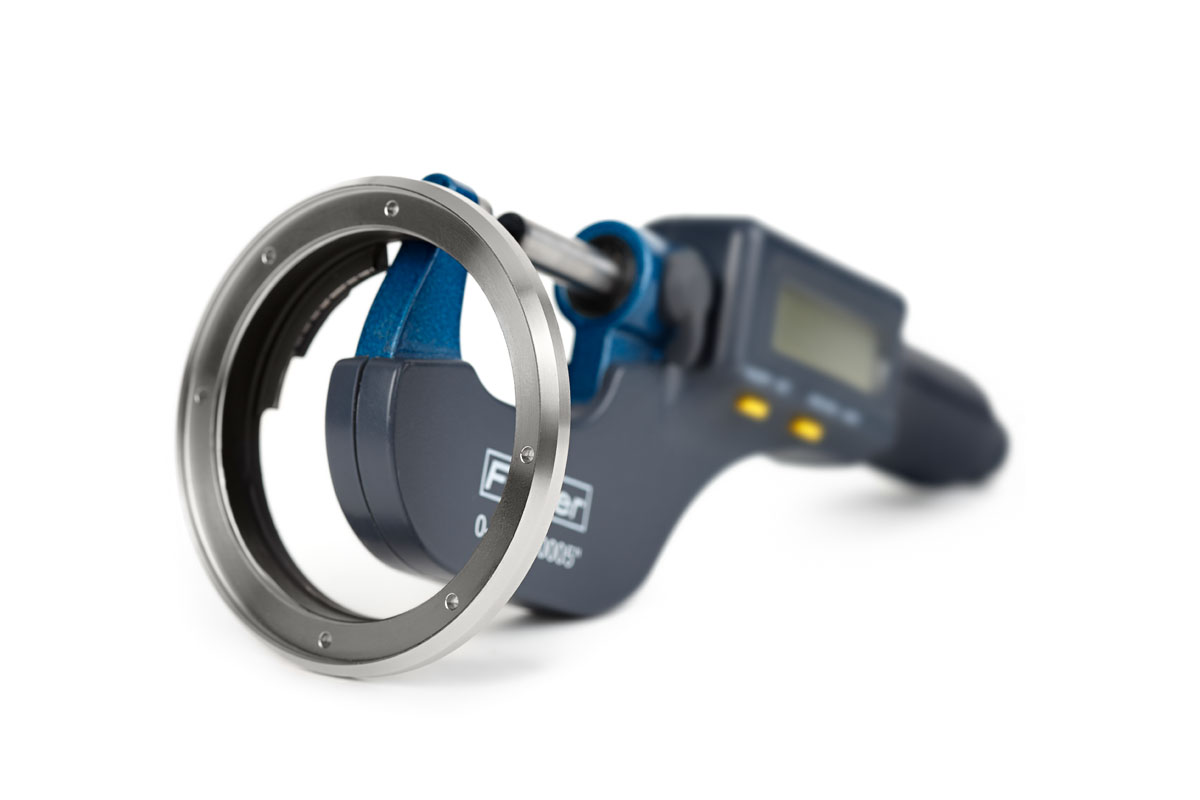
LEITAX ADAPTER FOR LEICA R TO CANON EF
Updated January 1, 2011

|

|

|

|

|

|

|
BACKGROUND
I got the itch to try a Leica 50mm F1.4 Summilux-R E60 on the Canon 1Ds Mark III, so I needed to decide on a lens adapter. Part of the research included emails with David Lladó at Leitax. With his guidance I ordered:
- Canon EOS Bayonet for Leica-R Lenses (6 Holes)
- Dandelion Chip for Canon, Pre-Installed on the Adapter
- Irazola Screwdriver
- The Plastic Tool shown on the Nikon page at the Leitax website
About two weeks after ordering the kit, the Leitax adapter arrived from the U.K.
INSTALLING THE LEITAX ADAPTER
For the Canon adapter, set-up is easy since the Leitax adapter simply sits on top of the Leica R mount. Installation is just a matter of lining up the screw holes and then using the longer screws (supplied with the Leitax kit) to secure the Leitax adapter in place. Within two minutes the Leitax adapter was securely in place and the 50 Lux-R was ready. Note - when all six screws are removed, the Leica mount will want to rotate because of the springs in the aperture mechanism. If the ball bearing for the aperture comes unseated, the Leica bayonet needs to be removed and the ball bearing reseated. It is an easy process and there are pictures on Leitax’s website.
PROGRAMMING THE DANDELION FOCUS CONFIRMATION CHIP
I began by following the Dandelion instructions posted here. I am used to the Optix V5 focus confirmation chips, and in comparison the Dandelion programming process is cumbersome, but it works. After setting the Dandelion optional parameter for manual focus, the Canon 1Ds Mark III worked as expected. I had to change the manual focus parameter because the shutter would not fire if the Canon 1Ds Mark III was in auto-focus mode and the subject was considered out-of-focus by the camera. If no beep, no shot. That setting could have lead to many missed shots, so I changed the setting. The Dandelion chip installation on the adapter itself looks pristine.
ADAPTER PERFORMANCE
The Leitax adapter is one piece, so it is rock solid. It screws to the Leica lens just like the original Leica bayonet. There is no flex, no shifting, no rotation. There are no flanges or tension springs that need spreading to ensure a tight fit between the adapter and lens because the lens is SCREWED to the adapter. Likewise, the fit on the Canon 1Ds Mark III is perfect. It mounts as smoothly as a Canon lens, and when locked into place, there is barely any rotational play.
The Leitax adapter’s fit finish is equally good. The adapter is cupped and its sides slip over the original Leica bayonet, so the finished result looks like a Leica / Canon made product. The metal used appears to be nice quality with a satin nickel finish look. In short - everything lines up perfectly, clicks in place soundly and feels solid. Adapter thickness appears correct as the Leica 50mm Summilux-R reaches infinity without any problems.
CONCLUSION
Leitax’s adapters use 6 or 10 screws (depends on the lens) to secure the lens to the adapter. This solution is rock solid and quality of the adapter appears excellent. This review is a no-brainer --- a big thumbs up for Leitax.
